transformer oil regeneration Manufacturers and Suppliers
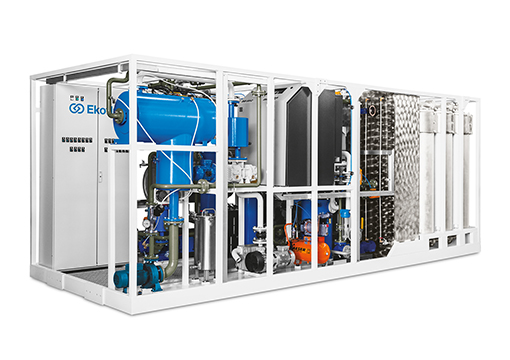
Oil ages during the operating life of a transformer. By performing oil reclamation, where the oil is passed through an absorbent, the oil can be reinserted in the transformer in an as new state.
Oil is a natural material which ages due to the operating environment and transformer properties. Through oil sampling and analysis, the condition of the oil can be inferred. Aged oil demonstrates higher concentration of oxidation and acids.
Oil reclamation or oil regeneration is a process whereby oil is processed to achieve a significant condition improvement, aimed at being as close to “as new” as possible, by removing the aging products. The processing is performed while a transformer is in service to achieve maximum effectiveness, with minimum impact to site operations. The oil effects the insulation in the transformer and the insulation effects the oil, hence the condition of the oil impacts the expected life of the transformer.
The modern reclaiming technology with the reactivation of the absorbent makes it economically feasible to use much more active absorbent material. Typically 5-10 times more absorbent is used compared with the old conventional systems. This leads to a much better cleaning effect of the paper and to an excellent long-term stability of the reclaimed oil.
For some transformers, there is data available for up to 10 years after reclamation. The data shows very little change in acidity and color after 10 years in operation since the oil was reclaimed.
To prevent excessive production of acids due to oil degradation, it is recommended that the oil be reclaimed before it is severely degraded. Low molecular weight acids do migrate into the paper insulation and become much harder to remove than from the oil.
The essential elements of the online reclamation technology are that the absorbent is automatically reactivated after each cycle and that the transformer remains in operation. The reactivation allows for using much more active absorbent than with the classical type of reclaiming plants, where the Fullers earth needs to be replaced frequently and thereafter has to be disposed The final step is to restore the inhibitor content.
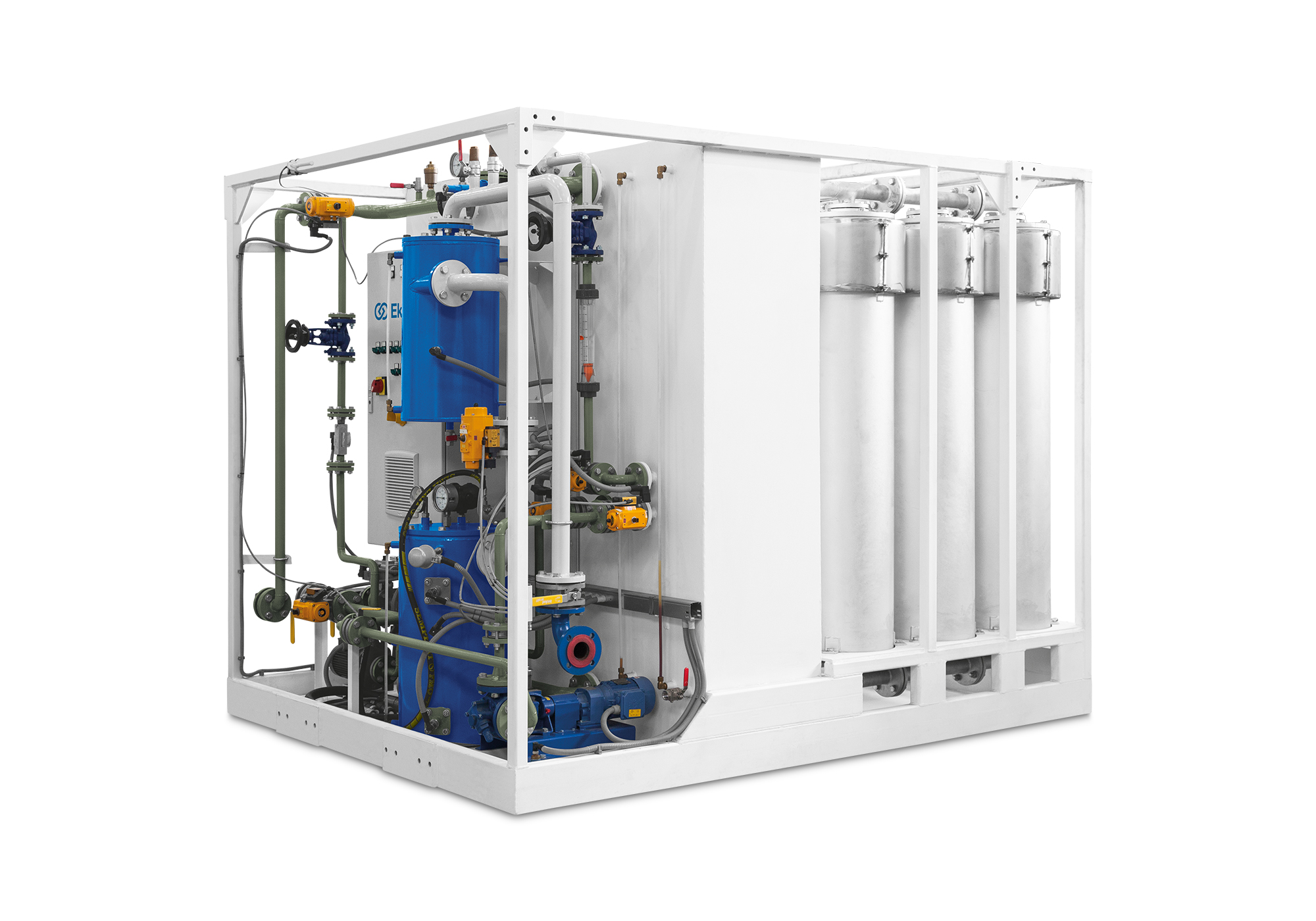
Most power equipment today is using transformer oil for its dielectric properties for cooling, insulating, and protecting the active part. Transformer oils are highly refined oils that consist mainly of a mixture of hydrocarbons. Over time, oxidation by-products start to form in the oil. Increases in oxidation by-products result in the increase of acidity (neutralization number) and decrease the interfacial tension of the oil. At this stage, sludge starts to form, and oil is losing its dielectric properties because it is getting old. To prevent further deterioration of oil and possible damage to the active part of the transformer, oil needs to be regenerated. Oil regeneration equipment regenerates oil in steps.
It is then heated to the desired temperature to elevate the regeneration effect. After the oil has been heated, it enters the back section of the equipment.
Oil is pumped through the back section which houses columns with sorbent media. It is in this section where the oil is stripped of impurities and ageing byproducts. Oil is then pumped through a vacuum breaking valve into the degassing section where it is dehydrated and degassed. Treated oil is then pumped back to the transformer by the outlet pump. After a given period, sorbent in the back section of the equipment achieves full saturation and is no longer able to regenerate oil.
Oil is then pumped through a vacuum breaking valve into the degassing section where it is dehydrated and degassed. Treated oil is then pumped back to the transformer by the outlet pump. After a given period, sorbent in the back section of the equipment achieves full saturation and is no longer able to regenerate oil.
At this stage, the sorbent needs to be reactivated (restored to its original state) to be able to regenerate oil again. Reactivation stage starts by draining the columns in the back section of saturated oil. After the oil has been drained, a vacuum is created and maintained throughout the whole reactivation process in the back section.
Before the beginning of the regeneration process the responsible staff member always carries out an onsite inspection to ensure the accessibility of the transformer and the possibility of connecting of oil regeneration equipment to the transformer.
Number of key factors need to be checked and measured, such as local power source availability, flange sizes for connection, distances from and to the transformer, check valves below the conservator and any other factors that might play a role in the subsequent oil regeneration service. After a successful onsite inspection exact dates for connecting and disconnecting of equipment are set. On the date of the connection to the transformer oil regeneration equipment is brought onsite and connected to the transformer. The connection process takes several hours to ensure that all safety requirement is fully met. After a successful connection oil regeneration process begins. Oil regeneration last from number of days up to several weeks depending on the oil contamination but mainly on the total quantity of oil inside the transformer. Once the oil quality inside the transformer has been determined by our staff to be satisfactory the last phase of the regeneration process is started. In the last phase the oil is inhibited to improve its anti-aging capabilities. Oil is then inspected in a certified laboratory to ensure that it meets the requirement of IEC 60422 standard for mineral insulating oils and equipment is than disconnected from the transformer and moved offsite.
All transformer oil regeneration equipment operated by Ekofluid is fully automatic controlled by a PLC system and visualized by a SCADA system. As a standard all units consist of 9 or 18 column modular sections each housing approximately 1200 kilograms of sorbent. Transformer oil regeneration equipment is capable of regenerating all mineral based transformer oil and has the ability to reactivate sorbent media for continuous operation onsite. All units are placed in a standard 6 or 12 meter long ISO containers that are specifically modified to accommodate the units. Each unit is transported by a truck onsite and it is attached to its own wheel base. The weight of individual units is between 12 000 and 18 000 kilograms. In case of a specific requirement the unit can be lifted of the wheel base and put into a specific position.
The level of contamination differs from transformer to transformer. The ageing process, as well as the utilization of a transformer, make it difficult to determine when and how will oil age to the point that it loses its dielectric properties. Regardless of the level of contamination, oil regeneration always delivers the result required by the IEC 60422 standard for mineral insulating oils in electrical equipment. However, our REOIL regeneration technology goes one step further and significantly improves on the values required by the IEC 60422 standard, with the returning oil having properties almost identical to those put into the transformer for the first time.
Ekofluid sees safety as one of the key factors to successful oil regeneration. It is precisely for this reason our onsite teams are specially trained to operate under strict safety guidelines to ensure maximum safety of all equipment present on site. All our personal is certified according the SCC safety guidelines. In order to maximize safety onsite our oil regeneration and oil treatment devices have implemented numerous safety features to minimize the possibility of risk. Fast closing electrics safety valves on the side of the transformer and on the side of oil regeneration equipment ensure that in case of a malfunction the transformer is completely sealed off therefore preventing any leakage of oil into the environment. Manual overheating protection inside the oil regeneration equipment ensures that in case of a software malfunction or misuse oil is not overheated and damaged. Entire oil regeneration equipment servers as an oil catch pan with level switch inside preventing of any leakage of oil into environment in case of a local malfunction of the unit. Constant monitoring of temperature, flow and vacuum parameters across the equipment ensures that in case of an unforeseen situation the equipment switches itself into a fail-safe mode. It is also very important to note that our personal never leaves the site during the operation of the equipment and therefore all our equipment is under constant supervision during its operation.
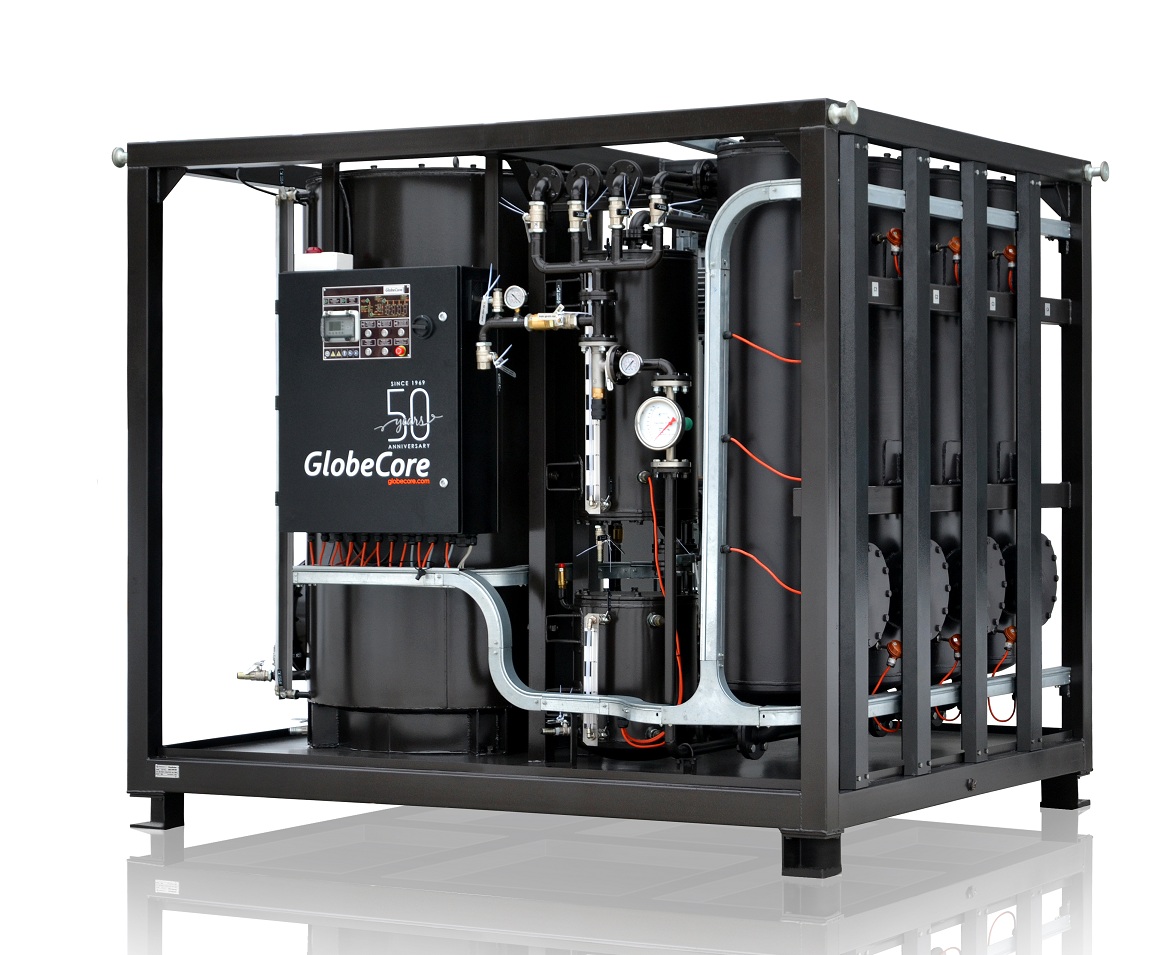
The growing consumption of electrical energy continuously demands higher degrees of durability and safety of operation of the generating, transforming, switching and conduction electrical devices. Transformer oil is in an environment that leads to a degradation in its desired properties. Over time, even in a proactive maintenance program, transformer oil loses its insulating properties and its cooling properties. The rating requirements and drive to tighter tolerances of modern transformers and electrical apparatus results in greater electrical stress in insulating material and fluids. To handle these stresses, oils are required to have better dielectric strength, and lower residual water content must be maintained to reduce the speed of oil aging. The timeous and proper treatment of these insulating fluids will result in the improvement of the properties of the entire insulating system of power transformers and will extend the effective lifetime of the asset.
The principal functions of the insulating fluid are to serve as a dielectric material and an effective coolant. To perform these functions, the insulating fluid must possess specific qualities at the time of initial impregnation of the transformer core and filling of the tank at the manufacturer’s factory and which must be maintained at the same level in field operation if optimum performance is to be guaranteed. Typically, these qualities are well-defined by international and national standards authorities e.g. IEC 296, BS 148, SABS 555, etc.
Transformer oils deteriorate with time and the decay begins the moment the transformer is brought into service. High temperatures, the presence of oxygen and water, the catalytic action of the materials within the transformer, all combine to result in oxidation and cracking of the transformer oil. The by-products of this oxidative process are acidic and the long-term effect of exposure to these products results in an ever-increasing rate of deterioration of the transformer and its oil. The resulting sludge build-up reduces the cooling effects of the oil driving the whole decay mechanism at an increasingly accelerated rate. Although there is no specific acidity level at which action should be taken to treat the oil (generally this action level is determined by the asset value), historical data shows that the acid number becomes exponential around the 0.2 mg KOH/g oil level.
Our EOK-TORS and TORS are used not only to stop the deterioration/ aging process of the oil, but to completely reverse the process. After the regeneration the oil is comparable with new oil, in many cases the oil quality is even better.
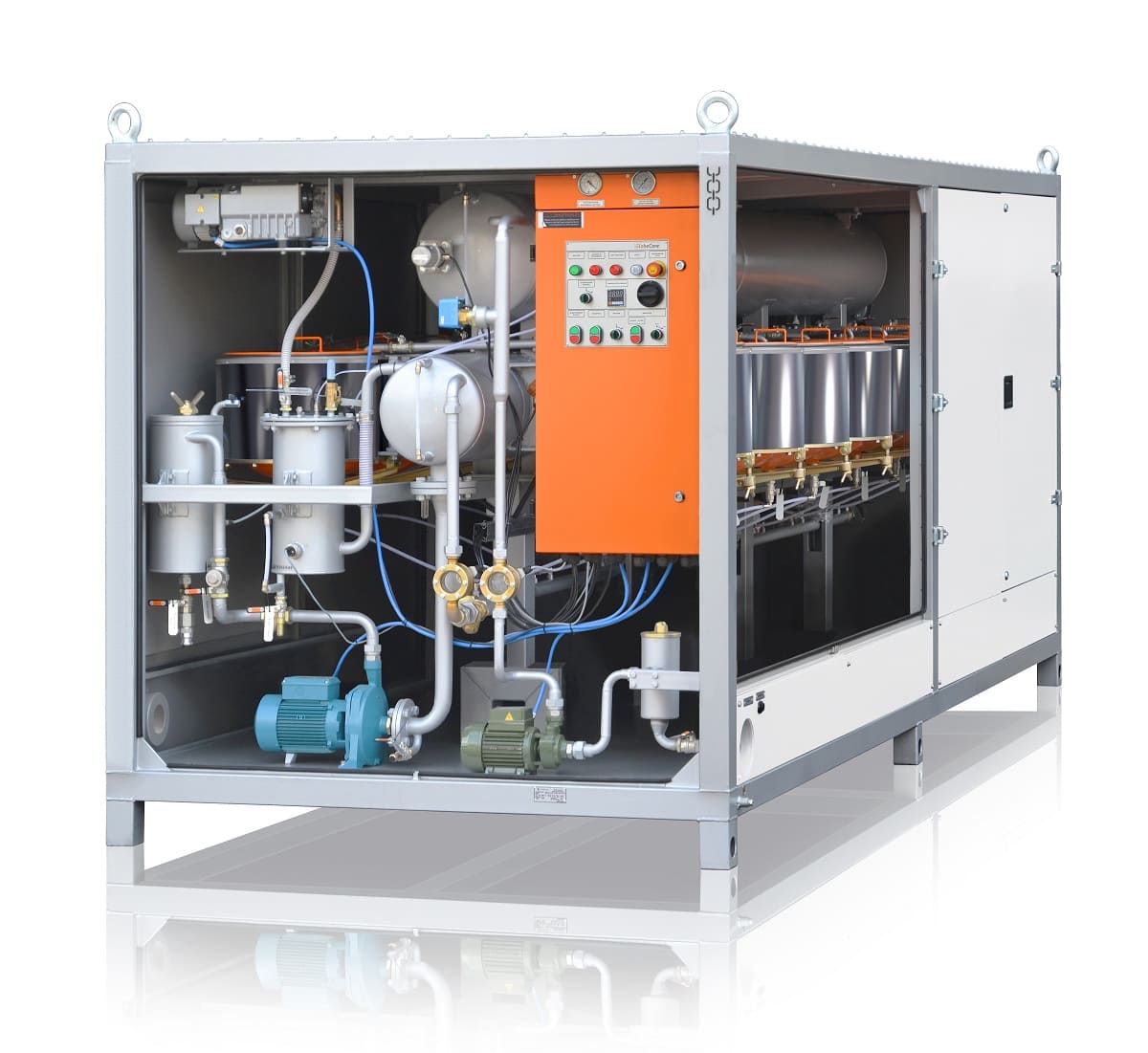
Power distribution and supply systems rely on transformers, and reliable transformer operation depends on the condition of its insulation system, to which transformer oil is integral. The principal functions of the insulating fluid are to serve as a dielectric material, coolant and moisture protector.
To perform these functions, the insulating fluid must have the necessary qualities at the time of initial impregnation and filling at the factory and later maintain the same quality in field operation. EMT supply the E575R for transformer oil regeneration.
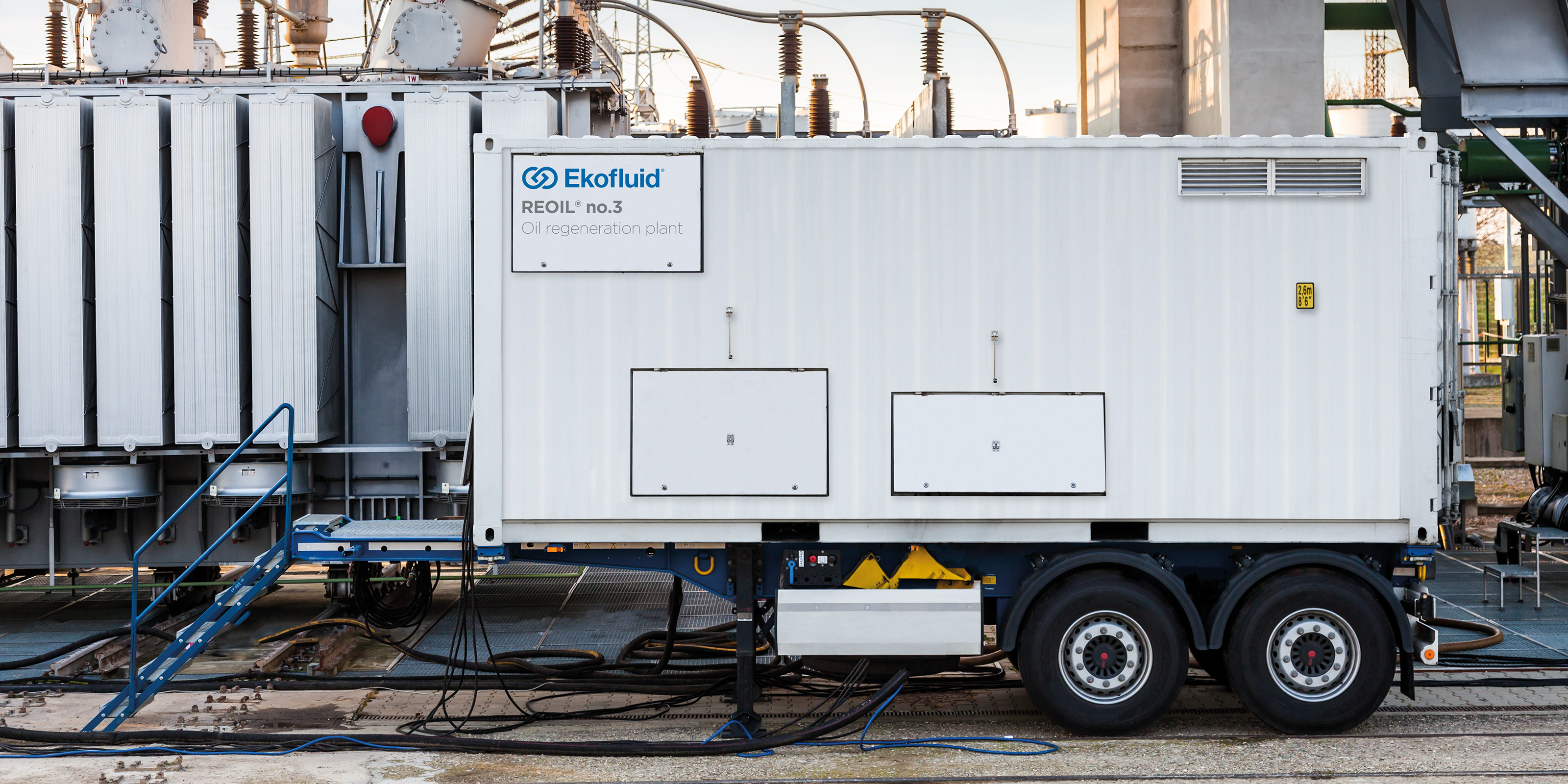
The condition of paper insulation and the magnetic circuits of a transformer is what determines the length of its service life. There is no meaningful limit to the service life of the magnetic elements, but paper insulation is prone to stress and wear over time; making its condition the most important factor of transformer long term service.
Normally, paper insulation ages over a long period of time, but the process can be significantly accelerated by heat, oxygen, water and the products of transformer oil oxidation. These products accumulate in the paper over time.
As mentioned above, paper insulation traps and accumulates the products of transformer oil aging, acting as a filter for the oil. Changing the oil in the transformer is not a complete solution: as soon as the transformer is filled with new oil, the accumulated contaminants from the cellulose insulation are washed into and solved in the oil. These contaminants accelerate oxidation of oil, forming new deposits in the paper insulation, and the cycle repeats itself over and over again. As far as transformer life extension is concerned, changing the oil is not a radically beneficial solution. Neither is the process of taking the oil out of the transformer, regenerating it and returning it into the transformer tank: the end result is similar to that of simple oil change, with the only benefit being the lower cost of the procedure.
The issue can be addressed, to a degree, during transformer overhaul. Flushing the paper with clean oil can remove much of the contaminants; however, the oxidation products deposited inside the paper are still difficult, if not impossible, to remove. Using special detergents helps, but these come at a significant cost and also make the process longer. To make the long story short, repairing the transformer and washing the paper insulation can cost as much as one third of an average new transformer price tag.
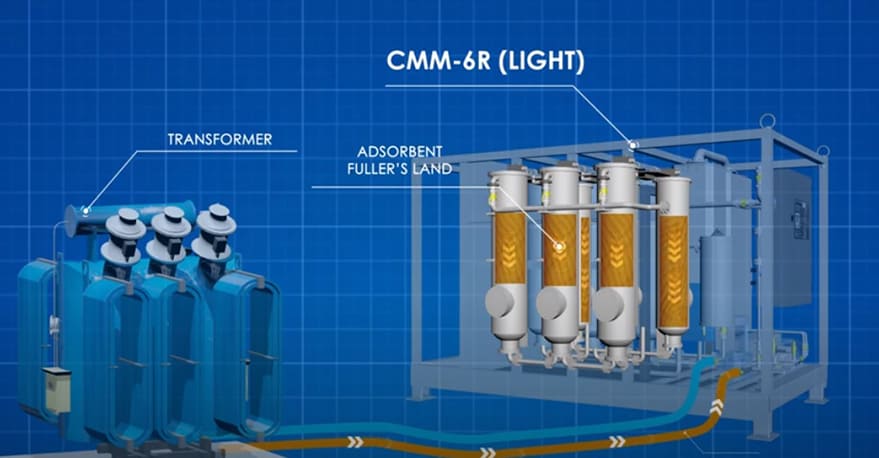
There is a method which deals with the above problems in a cost effective way: the GlobeCoreCMM-R oil regeneration plants. One of the distinctions of these highly efficient systems is that they can process oil in an energized transformer. This capability makes the machine an ideal solution to the problem of paper insulation treatment.
Operation of theCMM-R begins with connection to a powered transformer. The oil from the transformer passes into the unit for processing; the oxidation products are removed from the transformer with the oil, which undergoes regeneration and degassing processes. After the processing the oil goes back into the transformer, and the process is repeated in several cycles; the regenerated oil washes oxidation products from paper insulation. This cleaning process is enhanced by the high circulation rate, heat and vibration of the energized transformer, when contaminants are released from the paper into the oil and captured by the adsorbent in the unit when the oil is regenerated and degassed. The unit makes it possible to regeneration and purify transformer oil, at the same time cleaning the bulk of transformer paper insulation.
Apart from protecting the paper in the transformer and insulation transformer components, this oil services as a medium for heat dissipation in transformers, high voltage switches, OF cables and capacitors.
Transformer oil is a product of mineral crude oil processing. Since the properties of crude oil vary greatly with the specific type of crude (different chemical composition), so do the properties of mineral transformer oil.
Inside the transformer, the oil is subjected to processes and influences that cause oxidation and degradation. The quality and performance of the oil decrease, making oil oxidation an important factor in the general condition of the transformer and its service life as a whole.
Transformer oil can be processed: regenerated and purified to remove acids, water, gas, particulate matter and other contaminants, such as tar, resin, a range of hydrocarbons, sulfur and nitrogen compounds etc. There are many methods of processing transformer oil, which can be roughly divided into the following categories: mechanical, thermal, physical and chemical, and purely chemical methods. The latter are expensive and require complex systems, and are only applied if the simpler methods before it yielded no satisfactory effects.
The CMM-R process is relatively simple and efficient: the condition of processed oil is “as good as new”, and its quality corresponds to the provisions of the IEC 60296 standard. Using the system to address the issue of oil and paper insulation cleaning improves the quality of transformer insulation, increasing its service duration and saving on unexpected failure repairs and long periods of equipment down time.
Environmental issues are becoming an ever more pressing concern for industrial processing, with investors being generally more inclined to participate in ‘green’ manufacturing projects and back environmentally friendly approaches. The CMM-R unit is built with the environment in mind, because it has the capability to reactive the sorbent used in the process of oil regeneration many times over, before it is finally exhausted and must be discarded – as a clean mineral waste.
Of course, the reactivation also saves money which would otherwise be spent on buying new sorbent every time it is saturated, in addition to eliminating the need to buy new replacement oil. Transformer lifetime is increased by as much as 20 to 30 years, which further improves the environmental balance of the technology.
GlobeCore is a manufacturer of oil regeneration systems to suit the needs of transformer operators, servicing businesses and manufacturers. The company’s product range includes solutions for purification of transformer, turbine, industrial and other types of oil with convenient, high performance and practical oil recycling plants. The company’s products operate without environmentally hazardous emissions and are power efficient to reduce operating costs.
GlobeCore regeneration systems can use the same sorbent for up to 3 years before the first replacement. No more need for consumables and costly labor related to replacement of exhausted sorbent on the job site.
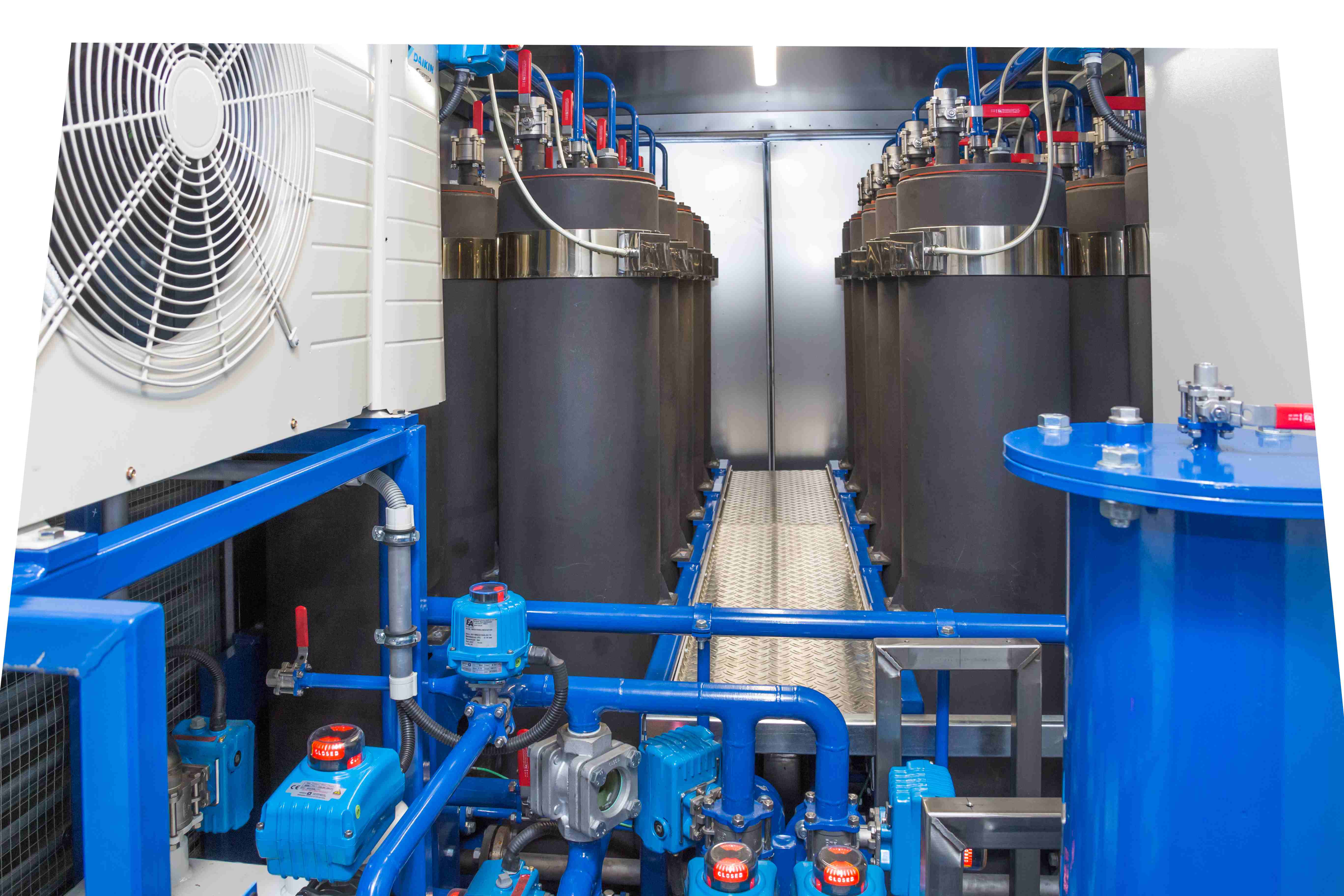
Rexon 12000LPH Transformer Oil Regeneration Purifier Machine is a combination of a high vacuum oil dehydrating and degassing system, a powerful filtering system, and an oil regeneration system. It is especially used for purifying and regenerating used transformer oil with acidity, impurities, moisture, air and bad color. This oil regeneration purifier takes fuller’s earth regeneration filters to regenerate used transformer oil to be new and pure color. It can remove acidity and free carbons completely from old oil, and eliminate moisture and gas from oil thoroughly.
ZYD-II Transformer Oil Regeneration Purifier Machine can deal with all different grade KV oil. For both low voltage oil and high voltage oil, it can perform a very high efficient oil purification, oil filtration and oil regeneration work. All insulating oil like used transformer oil, mutual inductor oil, switch oil and so on can be totally regenerated from oil to be new by our series ZYD-II plant.
As an important on-site transformer oil cleaning and transformer maintenance system, this plant can inject oil into the transformers on-line too. And it can be used as an independent vacuum resource plant to vacuuming transformers high efficiently.
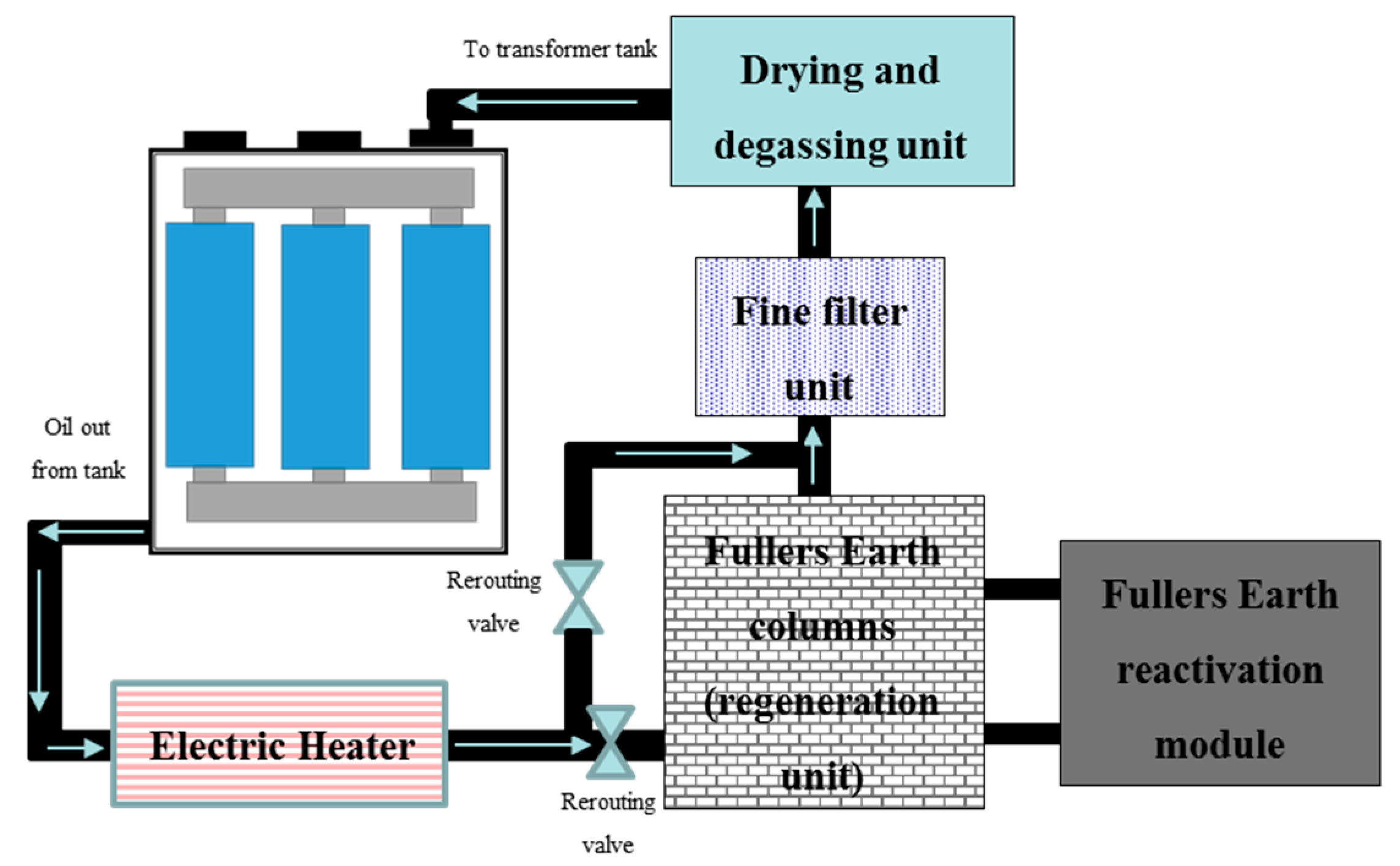
It is then heated to the desired temperature to elevate the regeneration effect. After the oil has been heated, it enters the back section of the equipment. Oil is pumped through the back section which houses columns with sorbent media. It is in this section where the oil is stripped of all impurities and ageing by-products. Oil is then pumped through a vacuum breaking valve into the degassing section where it is dehydrated and degassed. Treated oil is then pumped back to the transformer oil tank by the outlet pump. After a given period, sorbent in the back section of the equipment achieves full saturation and is no longer able to regenerate oil. At this stage, the sorbent needs to be reactivated or to be restored to its original state to be able to regenerate oil.
Reactivation stage starts by draining the columns in the back section saturated oil tank. After the oil has been drained, a vacuum is created and maintained throughout the whole reactivation process in the back section. Then by selective use of heating elements on the top parts of individual columns, the reactivation process is initiated. During the process, the impurities are removed from the sorbent to restore it to its original state. This entire process can be repeated many times until the sorbent starts to lose its properties and needs to be replaced.

•Regeneration is the procedure followed if oil purification is insufficient to return the oil to an acceptable condition , Regeneration is the restoration of the oil to, or better than, virgin oil specifications.
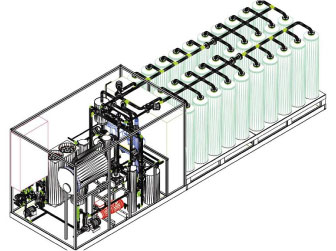
The increasing rating requirements of modern transformers and electrical apparatus results in greater electrical stress in insulating material and fluids. In order to handle these greater stresses, oils are required to have better dielectric strength, and lower residual water content must be maintained.
Transformer oils deteriorate with time. High operating temperatures, the presence of oxygen and water combined with the catalytic action of the materials within the transformer, result in oxidation and cracking of the oil. The by-products of oxidation are acidic and the long-term effect of these by-products results in an exponential increase in deterioration of the transformer and its oil. The resulting sludge build- up reduces the cooling effects of the oil driving the whole decay mechanism at an increasingly accelerated rate.
Spera process restores used oils to new like condition. This process makes it possible to fill transformers with oil that would previously have required disposal. The oil in the transformer can be used without replacement for the entire service life of the transformer.
Spera systems are designed to extend transformer service life by restoring the dielectric strength and chemical composition of dielectric insulating oil.
In the process of oil regeneration, oil degradation products and acidic compounds are removed, the oil becomes clear, oxidation resistance is improved, while gas solubility is reduced.
Used oil is strained, heated and filtered prior to flowing into a bank of columns which are filled with an adsorbent media. The oil’s primary physical parameters are restored during this phase. Upon exiting the columns, the oil is passed through a degassification unit and an after filter which restores the oil to virgin conditions. The banks of columns eventually become saturated and need to be reactivated. This reactivation is performed within the columns and does not require the adsorbent to be removed. The reactivation process typically takes 12 hours, during which time a second bank is used to process oil. Spera’s unique control system allows for 24 hour processing without having to shut the machine. Once reactivated the bank is again ready for processing. On average, between 300 and 500 reactivation’s per bank ensure that the media only needs to be changed every three to five years. Once exhausted, the media is reactivated one final time and is then discarded as a dry waste in a normal landfill – it is completely devoid of any oily waste.
The fuller earth is the best means of regeneration to treat the oil acidity. In function to the supply, while in service, an index between 0,4 and 0,6 Mg KoH/gr has to be considered as a maximum, above this one, there is a danger.
By removing solid impurities, dissolved moisture and gases from insulating or by fuller earth regeneration, enables to restore the oil dielectric properties and thus to extend the useful life of your transformer.
Fuller's earth can be used to decolorize and neutralize electrical insulating oils. It excels in neutralizing traces of strong inorganic acid.Due to the relatively large pores in fuller's earth, it is well adapted to the removal of high molecular weight sulfonates, resins and asphaltines.
Transformer oil will discolor as oxidation of the oil takes place. Color, by itself, is not a reliable test in evaluating the condition of the oil for further use. It is a strong indication that something is happening within the transformer that requires investigation. Once transformer oil changes from the yellow color range into the orange and red color range, it has degraded to the point where the vital parts of the transformer are being seriously affected.
As the color of the oil changes, sludge is forming in solution with the oil due to oxidation. This causes a drop in interfacial tension and an increase in the acid (neutralization) number. When transformer oil deteriorates to the red color ranges, deposited sludge continues to oxidize and harden, blocking vents and insulating cooling fins, ducts thereby causing raising operating temperatures. Insulation shrinkage may take place, and premature failure is possible.

The Mobile Regeneration plant has been designed specifically for on-site use to completely regenerate insulating oils in energised or de-energised transformers.
Although use of MRP is not a substitute for regular oil purification (degassing, drying and filtration), it does carry out the same functions as well as its main function which is the removal of acidity, sludge, other soluble oil decay products and discolouration while leaving the oil with an excellent oxidisation stability and reduced gassing tendency. Contaminants are also removed from the Transformer Internals. On Site Oil Regeneration is accepted as a factor leading to Extended Transformer Life. Complete MRP is mounted on a leak proof base and can be installed and operated in a semi-trailer, truck or sea freight type container. Computer controlled programme allows continuous oil regeneration in transformers without interrupting power transmission. The MRP is available in a range of capacities with a comprehensive range of optional extras, which are detailed in specification S211. Please view specification S211


Comments
Post a Comment